
What Does an ERP Consultant Do? (And Does Your Indianapolis Business Need One?)

If you have been researching ERP software for your business, you have probably come across the term "ERP consultant" more than once.
But what does an ERP consultant actually do? Is it just someone who installs software? A project manager? A trainer? A combination of all three?
The honest answer is that a good ERP consultant does all of those things, and several others that most businesses don't think about until they are already in the middle of a failed implementation.
This guide breaks down exactly what an ERP consultant does, what the engagement looks like from start to finish, and how to know whether your Indianapolis business actually needs one or whether you can go it alone.
The Short Answer
An ERP consultant helps your business select, implement, configure, and optimise an ERP system, then makes sure your team actually knows how to use it.
But that one sentence undersells what a good consultant actually does in practice. The real value is not in the technical setup. It is in the decisions made before a single line of configuration is written.
The wrong ERP system, configured the wrong way, for the wrong business processes, costs Indianapolis SMBs tens of thousands of dollars and months of lost productivity. An ERP consultant's primary job is to make sure that never happens to you.
What an ERP Consultant Does - The Full Breakdown
1. Business Process Analysis
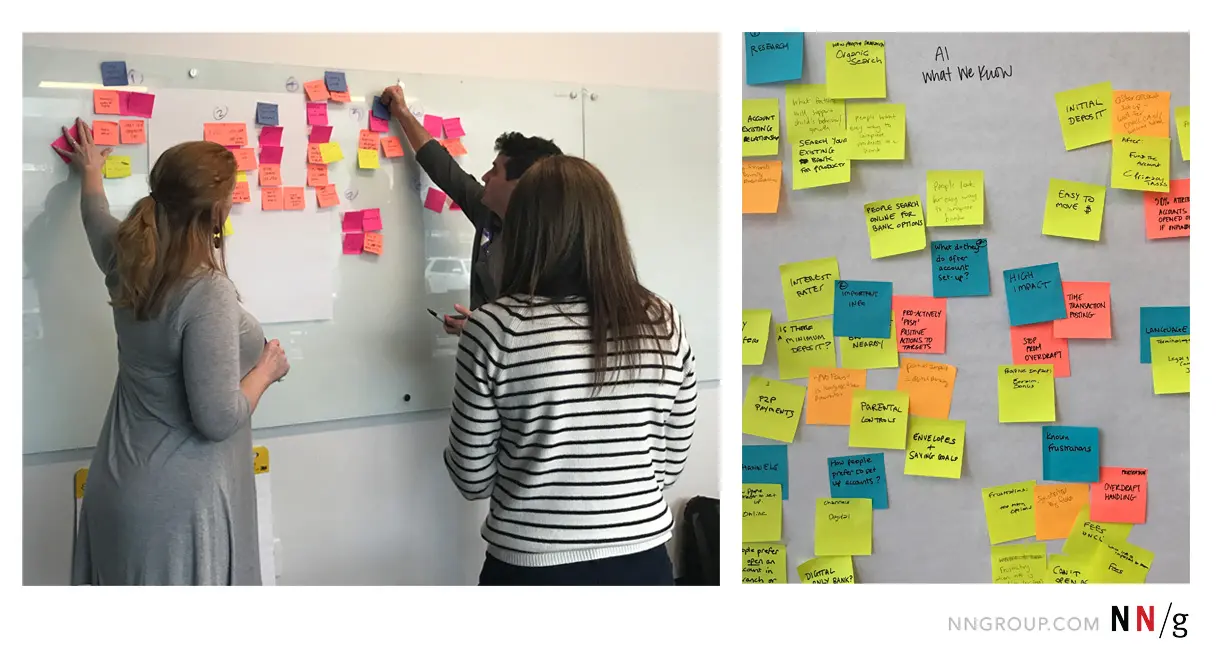
Before any software is touched, an ERP consultant sits down with your team and maps how your business actually works.
Not how you think it works. Not how the org chart says it works. How it actually works, the manual steps, the workarounds, the spreadsheets holding everything together, the handoffs between departments that nobody has ever documented.
This is called a business process analysis. It is arguably the most important thing an ERP consultant does and the step most businesses skip when they try to implement ERP on their own.
The output is a clear picture of your current operations, where the inefficiencies live, where data gets entered twice, where information gets lost between systems, and where automation would save your team the most time.
For Indianapolis businesses running on disconnected tools, separate accounting software, a CRM that doesn't talk to inventory, HR managed in spreadsheets, this analysis often reveals that the problem is bigger and more expensive than the business owner realised.
Wondering how much Odoo implementation costs in 2026? Learn what affects pricing, what businesses should expect, and how TND Technology Group delivers scalable ERP solutions tailored to your growth.
2. ERP System Selection

Once your processes are mapped, an ERP consultant helps you select the right platform for your specific situation.
This involves evaluating your requirements against available ERP systems — considering factors like your industry, your team size, your budget, your growth plans, and which modules you actually need versus which ones a salesperson tells you that you need.
At TND Technology Group, we specialise in Odoo ERP, a modular, open-source platform that consistently delivers the best combination of capability and value for Indianapolis SMBs under 100 employees. But the selection process is still specific to your business. A 12-person logistics company has different needs from a 45-person retail operation, even if both end up on Odoo.
A consultant who only sells one platform should still be honest enough to tell you when that platform is not the right fit. If it is not right for your business, a good consultant will say so before you commit.
3. Project Planning and Scoping
After the right system is selected, the ERP consultant defines the implementation plan.
This includes:
- Which modules get implemented first and in what order
- How long each phase will take
- What data needs to be migrated and from where
- Which team members need to be involved and when
- What the go-live date looks like and what happens on day one
For Indianapolis SMBs, the phased implementation approach is almost always the right one. Start with accounting and CRM. Get your team comfortable. Then add inventory, HR, or manufacturing in subsequent phases. This reduces risk, keeps costs manageable, and avoids the situation where your entire business is disrupted simultaneously.
A project plan also sets expectations clearly, what the consultant delivers, what your team is responsible for, and what success looks like at each stage. This is the document that prevents scope creep from turning a $15,000 implementation into a $40,000 one.
4. System Configuration and Customisation
This is the technical work most people picture when they think of an ERP consultant.
Once the plan is agreed, the consultant configures the ERP system to match your specific business processes. This means setting up your chart of accounts, configuring your sales workflows, mapping your inventory locations, building your approval chains, and adjusting the system's default behaviour to match how your business actually operates.
For most Indianapolis SMBs, standard configuration handles 80 to 90 percent of requirements. The remaining 10 to 20 percent may require custom development, building specific integrations with other tools your business uses, creating custom reports, or developing workflows that the base system does not support out of the box.
A good ERP consultant distinguishes clearly between what requires customisation and what can be solved by changing a business process instead. Custom development adds cost and complexity. Sometimes it is necessary. Often it is not.
5. Data Migration
Moving your historical data from your old systems into the new ERP is one of the most technically demanding parts of any implementation.
This means taking years of customer records, transaction history, product data, vendor information, and financial records from whatever format they currently exist in, spreadsheets, legacy software, multiple disconnected databases, and importing them cleanly into the new system with full integrity.
Data migration done poorly is one of the most common reasons ERP implementations fail. Duplicate records, missing history, incorrect account mappings, and corrupted inventory counts can all create problems that take months to clean up after go-live.
An ERP consultant manages this process with a defined migration methodology, mapping source data to destination fields, running test imports, validating the results, and running a final production migration immediately before go-live.
6. Training

An ERP system is only as valuable as the team using it. Configuration without training is one of the most common implementation mistakes Indianapolis businesses make.
An ERP consultant designs and delivers a training programme tailored to your team's actual roles. Your finance team learns the accounting workflows. Your sales team learns the CRM and quoting process. Your warehouse team learns the inventory and order management functions. Leadership learns how to read dashboards and run reports.
Training is not a one-time event. A good consultant builds documentation your team can reference after go-live — process guides, video walkthroughs, and a support channel for questions that come up in the first weeks of live operation.
7. Go-Live Support
The moment a new ERP system goes live is the most stressful day of any implementation. Processes that worked perfectly in testing suddenly have edge cases nobody anticipated. Team members who were confident in training freeze up when it is real data and real customers.
An ERP consultant is on the ground - or on call - during go-live to resolve issues in real time. This support period typically runs for two to four weeks post-launch and is the difference between a smooth transition and a chaotic one.
At TND Technology Group, every implementation includes a defined hypercare period after go-live. Your team has direct access to our consultants while they are building confidence in the new system.
8. Ongoing Optimisation
An ERP system should improve as your business does. The configuration that was right on day one is not necessarily the best configuration twelve months later when your team has grown, your product range has expanded, or your processes have evolved.
An ERP consultant in an ongoing capacity helps you identify where the system can be optimised, what new modules would add value as you grow, and how to take advantage of new features in each platform update.
For Indianapolis businesses on Odoo, this is particularly relevant given Odoo's regular release cycle, version updates consistently add functionality that can be leveraged without additional licensing costs.
What an ERP Consultant Does NOT Do
It is worth being direct about this because expectations matter.
An ERP consultant is not a software vendor. They do not own the platform and they cannot control licensing prices.
An ERP consultant is not a managed IT provider. Day-to-day server maintenance, network security, and hardware management are separate from ERP consulting, though at TND Technology Group, we offer both, which means Indianapolis clients have a single point of contact for their full technology stack.
An ERP consultant cannot fix broken business processes for you. They can identify them, recommend solutions, and configure the system to support better processes, but your team has to commit to the change. The most common reason ERP implementations underperform is not bad software or bad consultants. It is an organisation that configured a new system around old habits.
Do Indianapolis Businesses Actually Need an ERP Consultant?
Not always. Here is an honest answer.
If your business has fewer than 5 employees, relatively simple operations, and you have a technically capable person on the team who can dedicate time to learning the platform, a self-implementation of Odoo Community Edition is a legitimate option.
If your business has 10 or more employees, multiple departments, existing data that needs to be migrated, or processes that involve more than one person, a consultant will save you significantly more than they cost. The average cost of a failed or poorly executed ERP implementation is estimated at 2–3x the original project budget. A consultant's fee is the insurance policy against that outcome.
The businesses we work with most commonly at TND are Indianapolis companies between 15 and 100 employees who have outgrown their current setup, running accounting in QuickBooks, CRM in a spreadsheet, inventory in another tool, and HR across three different apps, and need someone to consolidate everything into a connected system without shutting down operations to do it.
What to Look for in an ERP Consultant for Your Indianapolis Business
When evaluating ERP consultants, ask these questions:
Are they certified by the ERP platform they recommend? For Odoo specifically, look for an official Odoo partner. TND Technology Group is an Indianapolis-based Odoo implementation partner.
Do they start with a process analysis before recommending a solution? Any consultant who recommends a specific system before understanding your business is selling, not consulting.
Can they show you completed implementations similar to yours? Case studies, references, and real client outcomes matter more than sales decks.
Are they local? An Indianapolis-based ERP consultant understands the local business environment, can meet in person during critical implementation phases, and is invested in your long-term success in the same market.
What does post-implementation support look like? Go-live is not the finish line. Understand exactly what support is included after the system is live.
Ready to Talk to an ERP Consultant in Indianapolis?
TND Technology Group has been helping Indianapolis businesses implement and optimise ERP systems for over 21 years. We start every engagement with a free 60-minute Systems Mapping Call, no pitch, no pressure, just a clear picture of what your business needs and whether Odoo is the right fit.
If it is not the right fit, we will tell you that too.
👉 Book your free Systems Mapping Call : Book Now
TND Technology Group Inc. is an Indianapolis-based IT solutions company specialising in Odoo ERP implementation, managed IT services, and Sangoma business communications for small and mid-sized businesses. 3815 River Crossing Parkway Suite 100, Indianapolis, IN 46240.